
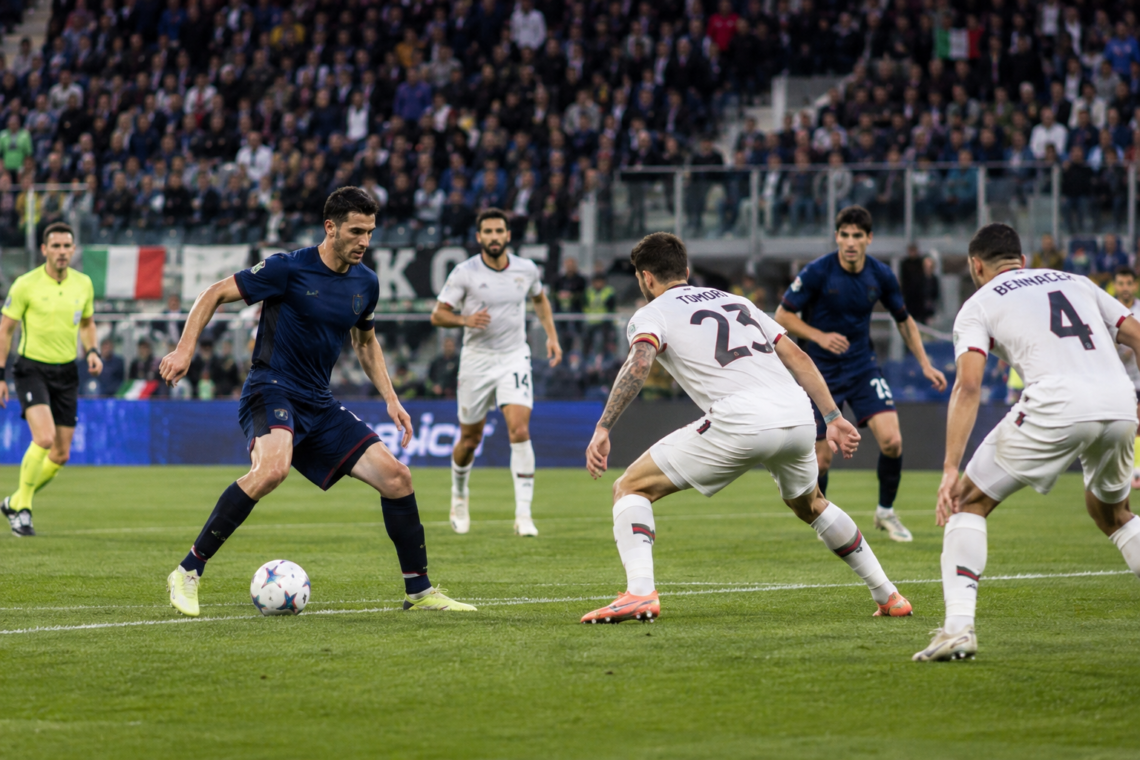
Italian football has long attracted attention for its appreciation of tactical detail. A match in Serie A can develop into a contest of patience, positioning and calculated decisions, where a single movement may create an advantage that has been carefully prepared several minutes earlier. The most important moments are not always spectacular. Sometimes the decisive action begins with a defender stepping forward, a midfielder closing a passing lane or a forward recognising a gap before the opposition can react. Exploring Serie A match replays allows supporters to revisit these encounters and appreciate the strategic thinking behind the action.
The Italian championship offers a distinctive viewing experience because its teams approach matches with different priorities. Some focus on controlling space and limiting the opponent’s opportunities, while others favour aggressive pressing, rapid transitions and attacking combinations. The result is a competition in which the battle for control can be just as compelling as the moments near the penalty area.
Defence as an Active Part of the Game
Italian football is frequently associated with defensive organisation, but modern defending involves far more than placing players close to their own goal. A well-organised team attempts to influence where the opponent can move, which passing options remain available and how quickly an attack can develop.
Defenders must constantly evaluate the positions of teammates and opponents. A centre-back may step forward to challenge an advancing striker, but only if another player is ready to cover the space behind. A full-back can move towards the touchline to prevent a winger from turning, while a midfielder shifts across to protect the central channel.
These decisions depend on coordination. If one player reacts too early or moves in the wrong direction, the entire defensive structure can become vulnerable. The challenge is not simply to stop an individual opponent but to prevent the attacking team from establishing the conditions it needs to create a chance.
A complete match replay makes these relationships easier to recognise. Supporters can observe how a defensive unit moves as a group, how players exchange marking responsibilities and how the team responds when possession changes.
The Battle for Space in Midfield
The central area of the pitch is often where the strategic character of a Serie A match becomes most visible. Midfielders must balance several responsibilities: protecting the defence, supporting attacking movements and helping the team maintain possession under pressure.
A side that controls the centre can influence the direction and tempo of the match. Its midfielders may slow the game through short passes, draw opponents out of position or accelerate play with a vertical delivery. The opposing team must decide whether to challenge this control directly or protect its defensive structure and wait for a mistake.
Individual positioning can make a substantial difference. A midfielder who receives the ball between two opposing lines may turn towards goal and create an attacking opportunity. If the same player is forced to receive with their back to the opposition, the attack may lose momentum.
The most interesting details often appear before the pass arrives. A player might move away from an opponent to create a passing angle, while a teammate occupies a nearby position to prevent the defensive midfielder from stepping forward. These movements are difficult to appreciate through isolated clips, but they become clearer when the full sequence is visible.
Formations Are Starting Points, Not Fixed Instructions
One of the most revealing aspects of modern Italian football is the way teams can change their structure during a match. A formation written on a team sheet provides only an initial description of the players’ positions. Their actual responsibilities may shift depending on whether the team has possession, is defending or is attempting to recover the ball.
A side that begins with three central defenders may use its wide players to create attacking width. During defensive phases, those same players can drop deeper and help form a more compact line. A team that starts with four defenders may move a full-back into midfield when building attacks, creating an additional passing option without making a permanent substitution.
These changes are not necessarily dramatic. They can involve a single player adjusting their position or two teammates exchanging responsibilities. Nevertheless, the effect can be significant because the opponent must continually reassess its own structure.
Watching a match again offers a useful opportunity to identify these transformations. Supporters can compare the team’s shape during different phases and understand why the same formation may look entirely different depending on the situation.
Patience Can Be an Attacking Weapon
A patient approach is sometimes mistaken for a lack of ambition. In reality, keeping possession without rushing forward can be an effective way to create attacking opportunities.
When a team moves the ball across the pitch, it forces the opponent to adjust its defensive positions repeatedly. Players must decide when to press, when to remain compact and when to follow an opponent moving into another area. Every adjustment creates the possibility of a mistake or a small opening.
The attacking side must recognise the right moment to accelerate. A quick pass into the space between midfield and defence can suddenly transform a controlled possession sequence into a dangerous attack. A diagonal delivery may bypass several opponents, while a forward’s movement can create room for a teammate arriving from deeper positions.
The timing of these actions is crucial. An attack that develops too slowly may allow the defence to recover, while an early attempt to force a pass can result in lost possession.
A full viewing experience reveals the relationship between patience and acceleration. It shows how teams prepare attacks, how they test the opposition’s defensive structure and why some opportunities emerge only after several seemingly uneventful passes.
Individual Duels Within the Collective Plan
Football remains a team sport, but matches are often influenced by small battles between individual players. A forward attempting to escape a centre-back, a winger challenging a full-back or a midfielder trying to avoid an opponent’s pressing pressure can all become important parts of the wider contest.
These duels are rarely isolated. Their outcome can affect the positions of several other players. If a winger repeatedly beats the full-back, the opposing midfielder may need to provide additional defensive support. This can reduce the number of players available for counterattacks and change the team’s attacking balance.
The same applies to strikers operating against organised defensive lines. A forward may not receive many passes, yet their movement can force defenders to retreat or move away from their preferred positions. This creates opportunities for attacking midfielders and wide players.
Watching the complete match helps explain why certain players remain influential even when they do not score. Their work can alter the structure of the opposition and create advantages that become visible only later in the sequence.
Set Pieces and the Value of Preparation
Corners, free kicks and other dead-ball situations occupy an important place in football strategy. They allow teams to organise movements in advance and target specific weaknesses in the opponent’s defensive arrangement.
A corner can involve several coordinated runs. One player may move towards the near post to attract defenders, while another attacks the space further away from goal. A short delivery can create a better angle for a cross, and a player positioned outside the penalty area may be ready to collect a clearance.
Defending these situations requires equally careful preparation. Teams must decide how to divide responsibility between individual marking and protecting particular zones. Players need to communicate and react quickly when the ball changes direction.
The effectiveness of a set piece often depends on details that are easy to overlook: the timing of a run, the positioning of a blocker or the decision to move towards the goalkeeper. Replaying the entire sequence can reveal the preparation behind what initially appears to be a simple cross or header.
The Art of Managing a Difficult Match
Not every contest develops according to the original plan. An early goal, an injury or a tactical problem can force a manager to reconsider the team’s approach. The ability to respond without losing overall organisation is one of the most valuable qualities in professional football.
A team that falls behind may need to increase its attacking presence, but doing so creates additional defensive risks. A side protecting a narrow advantage faces the opposite problem: it must remain compact without allowing the opponent to build constant pressure.
Managers can respond through substitutions, positional adjustments or changes in pressing intensity. Sometimes the most effective decision is not to introduce another attacker but to strengthen the team’s ability to retain possession and reduce the opponent’s opportunities.
The psychological dimension is equally important. Players must remain disciplined when the match becomes tense, especially during the closing stages. A moment of frustration can lead to an unnecessary foul, while a loss of concentration may create an opportunity for the opposition.
A full match replay makes it possible to follow these decisions in context and evaluate how successfully the team manages changing circumstances.
Why the Complete Match Reveals More Than Highlights
Short summaries are useful for remembering goals and major incidents, but they cannot always explain how a result was achieved. A match may be decided by a sequence of defensive interventions, an adjustment in midfield or a period of sustained pressure that does not produce an immediate goal.
This is particularly relevant when following Serie A, where the tactical structure of a contest can be as important as its most visible moments. Supporters who revisit complete matches can examine how teams protect space, build attacks and respond when their plans are challenged.
They can also develop a better understanding of individual performances. A defender’s positioning may prevent several dangerous situations without producing a spectacular tackle. A midfielder may control the rhythm of the game through careful passing, while a forward creates opportunities by moving defenders away from important areas.
These contributions become easier to appreciate when the entire contest is visible. Rather than judging a player through a single incident, viewers can consider their consistency, awareness and influence over different phases of play.
A Championship That Rewards Attention to Detail
Serie A offers a football experience in which strategy, technique and individual quality constantly interact. Its matches can feature patient construction, aggressive defensive challenges, carefully prepared set pieces and rapid changes in attacking direction. The character of each fixture emerges from the decisions made by players and coaches as the contest develops.
For supporters, returning to a complete match provides an opportunity to discover the ideas behind those decisions. It can reveal why a team controlled a particular area, how a defensive adjustment changed the balance or why an apparently quiet period became important to the final outcome.
Italian football is often most rewarding when viewed with patience. Its tactical details may not always be immediately visible, but they give every phase of the game a deeper meaning. Looking beyond the scoreline allows supporters to appreciate not only what happened, but also the planning, discipline and intelligence that made it possible.
